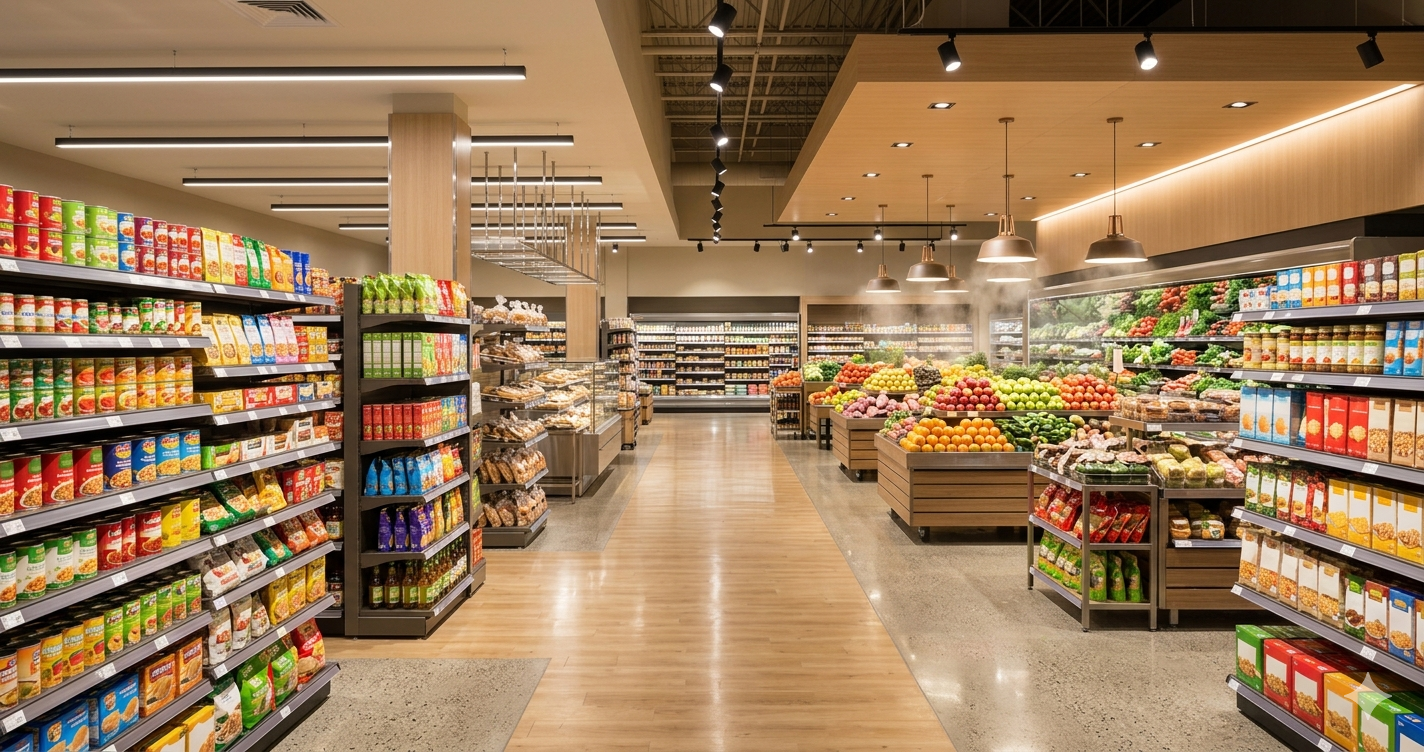
Your grocery store can lose thousands of dollars overnight without a single customer complaint. A power outage spoils your entire meat and dairy section. A customer slips on a wet floor and files a lawsuit. An employee gets injured moving heavy stock. These aren’t rare events. They happen to grocery stores across the USA every single week.
In this guide, you’ll learn exactly what grocery store insurance covers, how much it costs in 2026, which policies you need, and how to lower your premiums starting today.
Grocery stores face risks that most retail businesses never deal with. Perishable inventory spoils fast. Refrigeration units break down. Food contamination can trigger product recalls. These are grocery-specific risks that a basic retail policy simply won’t cover.
Customers also move through your store constantly. Wet floors, crowded aisles, and heavy carts create daily slip-and-fall liability exposure. One serious injury claim can cost $50,000 or more before legal fees even begin.
Then there’s theft. Grocery stores lose billions annually to shoplifting and organized retail crime. High-value items like alcohol, meat, and baby formula are top targets. Without grocery store business insurance, one bad week can erase an entire month of profit.
Most grocery stores use a Business Owner’s Policy (BOP) as their foundation. A BOP bundles the essential coverages into one affordable package.
| Coverage | What It Protects |
| Commercial Property | Building, fixtures, equipment, and inventory |
| General Liability | Customer injuries and lawsuits |
| Food Spoilage | Perishable losses from power outages or equipment failure |
| Equipment Breakdown | Refrigeration units, freezers, POS systems |
| Business Interruption | Lost revenue during forced closures |
| Workers’ Compensation | Employee injuries required by law in most states |
| Crime / Theft | Burglary, shoplifting, employee dishonesty |
| Cyber Liability | POS system breaches and customer data theft |
| Product Liability | Claims from contaminated or harmful food products |
This problem happens when store owners assume their property policy covers spoiled food. It usually doesn’t not without a specific food spoilage add-on. This coverage pays for lost perishables after power outages, refrigeration failure, or contamination. For any store carrying fresh produce, meat, or dairy, this is non-negotiable.
You can solve this by adding specialty coverage to your base BOP. Stores selling liquor need liquor liability insurance. Delis and meat counters need stronger product liability limits. Delivery operations need commercial auto and shipping coverage. A standard BOP won’t cover these automatically.
Most grocery stores pay $87–$149 per month for a BOP in 2026. Here’s the full breakdown:
These factors directly change your grocery store insurance cost:
Pro Tip: Bundling all your coverages into one BOP saves most grocery stores 10–25% compared to buying policies separately.
You reduce premiums by reducing risk insurers price policies based on how likely a claim is.
Customers struggle most when equipment fails without warning. Schedule regular refrigeration maintenance. Install temperature monitoring alerts. Keep service records insurers reward documented maintenance with lower rates.
Install CCTV cameras at all entry points, checkout lanes, and storage areas. Use locked cases for alcohol and baby formula. Train staff on shoplifting spotting. These steps cut crime claims and lower your grocery store liability insurance cost directly.
The system works by reducing human error the #1 cause of grocery store claims. Train employees on spill response, food safety protocols, and safe lifting techniques. Document every training session. Insurers ask for this during underwriting.
What does business insurance for grocery stores cover?
A BOP covers commercial property, general liability, food spoilage, equipment breakdown, business interruption, workers’ comp, and theft. Add cyber liability and product liability for full protection.
Is grocery store insurance required by law?
Workers’ compensation is legally required in most states once you have employees. Landlords and lenders almost always require liability and property coverage too.
Why is food spoilage coverage so important?
One refrigeration failure can destroy thousands in perishable inventory. Food spoilage coverage reimburses those losses directly it’s essential for any store carrying fresh or frozen goods.
The right business insurance for grocery stores keeps one bad event from shutting you down. A BOP gives you core protection. Specialty add-ons cover the unique risks of food retail.
At Insurance Services, we’ve spent 20+ years protecting grocery and food retail businesses across the USA. We know exactly what coverage you need and what you don’t.
Call us today for a free, no-obligation quote.
(866) 757-5350