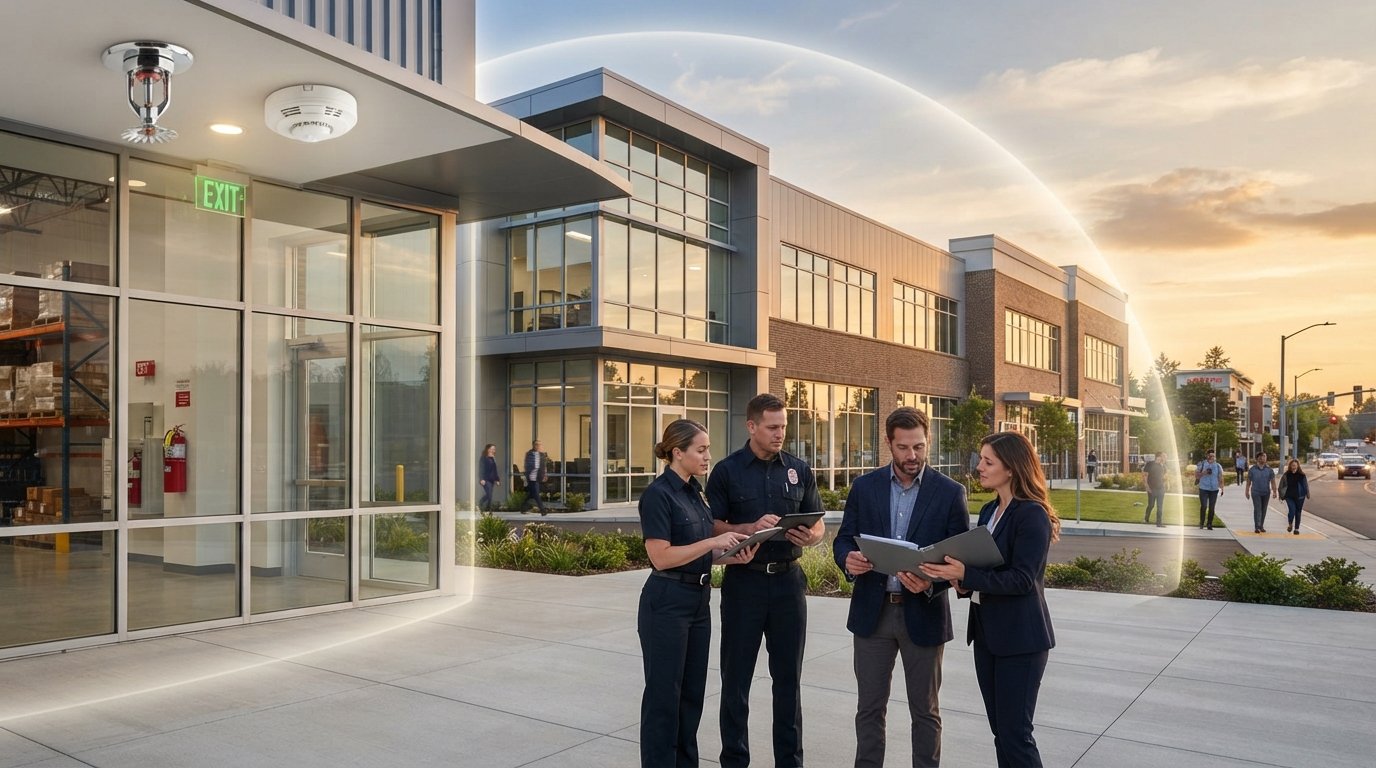
A fire can destroy your business in hours and no insurance means starting from zero. Every year, thousands of US businesses suffer fire losses. Many never reopen. Without the right commercial fire insurance, one fire ends everything you worked for.
You are not alone in feeling confused about coverage. Many business owners think their general policy covers fire fully it often does not. The gaps can cost hundreds of thousands of dollars. That confusion is something we have helped business owners clear up for over two decades.
In this guide, you will learn what commercial fire insurance covers, how much it costs in 2026, and how to pick the right policy. You will also learn how to file a claim fast and cut your premium with smart fire prevention.
Commercial fire insurance protects your business property from fire damage. It covers your building, equipment, inventory, and more. This policy pays to repair or rebuild after a fire.
Most businesses carry it as part of a commercial property insurance package. Some buy it as a standalone policy. Either way, it is one of the most important protections you can have.
This problem happens when business owners skip it. They assume their lease or general liability policy covers fire. It usually does not. A restaurant, warehouse, or retail shop can face total loss without this coverage.
Commercial fire insurance covers direct fire damage to your building and its contents. Here is a breakdown of what a standard policy typically includes:
| Coverage Type | What It Pays For |
| Building damage | Walls, roof, floors, fixtures |
| Business contents | Equipment, inventory, furniture |
| Debris removal | Cleanup and hauling after a fire |
| Business interruption | Lost income while you rebuild |
| Extra expenses | Temporary space, equipment rental |
| Explosion & lightning | Perils closely related to fire |
Business interruption coverage replaces lost income when fire forces you to close. This is one of the biggest gaps we see. A bakery, for example, may lose three months of revenue during repairs. Without this, the owner pays rent, payroll, and bills but earns nothing.
Customers struggle with understanding this gap. Many think fire damage coverage alone is enough. It covers the building. It does not replace what you lose while it is fixed.
Not everything is included. Standard exclusions include:
Commercial fire insurance costs between $500 and $4,500 per year for most small businesses. Larger buildings or higher-risk industries pay more.
These factors affect your premium the most:
You can solve this by installing fire suppression systems. Many carriers offer discounts of 5–15% for sprinklers and monitored alarm systems.
Replacement cost coverage pays to rebuild or replace property at today’s prices. Actual cash value pays less it subtracts depreciation.
This is a common mistake we see on job after job. A business insures equipment bought five years ago. After a fire, the payout reflects the depreciated value, not what new equipment costs. They end up short by thousands.
Always ask for replacement cost coverage. The premium difference is small. The payout difference after a loss is huge.
Filing your claim quickly and correctly protects your payout. Here is the step-by-step process:
Common pitfalls: throwing away damaged items before the adjuster visits, missing the claim filing deadline, or failing to document business income losses.
Good fire prevention directly lowers your commercial fire insurance cost. Carriers reward low-risk businesses with better rates.
The system works by showing your insurer that you actively reduce risk. Lower risk equals a lower premium.
Q1: Is commercial fire insurance required by law? It is not always required by law, but lenders and landlords often require it before approving a lease or loan.
Q2: Does commercial fire insurance cover wildfire? Yes, most standard policies cover wildfire as a fire peril. However, properties in high-risk wildfire zones may face higher premiums or limited coverage.
Q3: What is the coinsurance clause? It requires you to insure your property for at least 80–90% of its full value. If you underinsure, you pay a penalty on any claim.
Q4: Can I get fire insurance for a small business? Yes. Small businesses can get affordable coverage through a Business Owner’s Policy (BOP), which bundles fire, liability, and property coverage.
Q5: How long does a fire insurance claim take? Simple claims resolve in 2–4 weeks. Complex claims involving large losses or disputes can take 2–6 months.
Commercial fire insurance is not optional it is essential. Fire is one of the top causes of business loss in the USA. The right policy covers your building, contents, and lost income while you recover. Choosing replacement cost coverage, adding business interruption protection, and investing in fire prevention saves money both before and after a loss.
At OLPolicy Insurance Services, we have helped business owners across the USA find the right commercial fire insurance coverage for their needs. We know the gaps, the pitfalls, and the carriers that deliver when it matters most. Our team works with you to build a policy that truly protects your business.
Do not wait until after a fire to find out you were underinsured. Call us today at +1 (866) 757-5350 we will review your current coverage, identify gaps, and find the best commercial fire insurance policy for your business. OLPolicy is here when you need us most.