
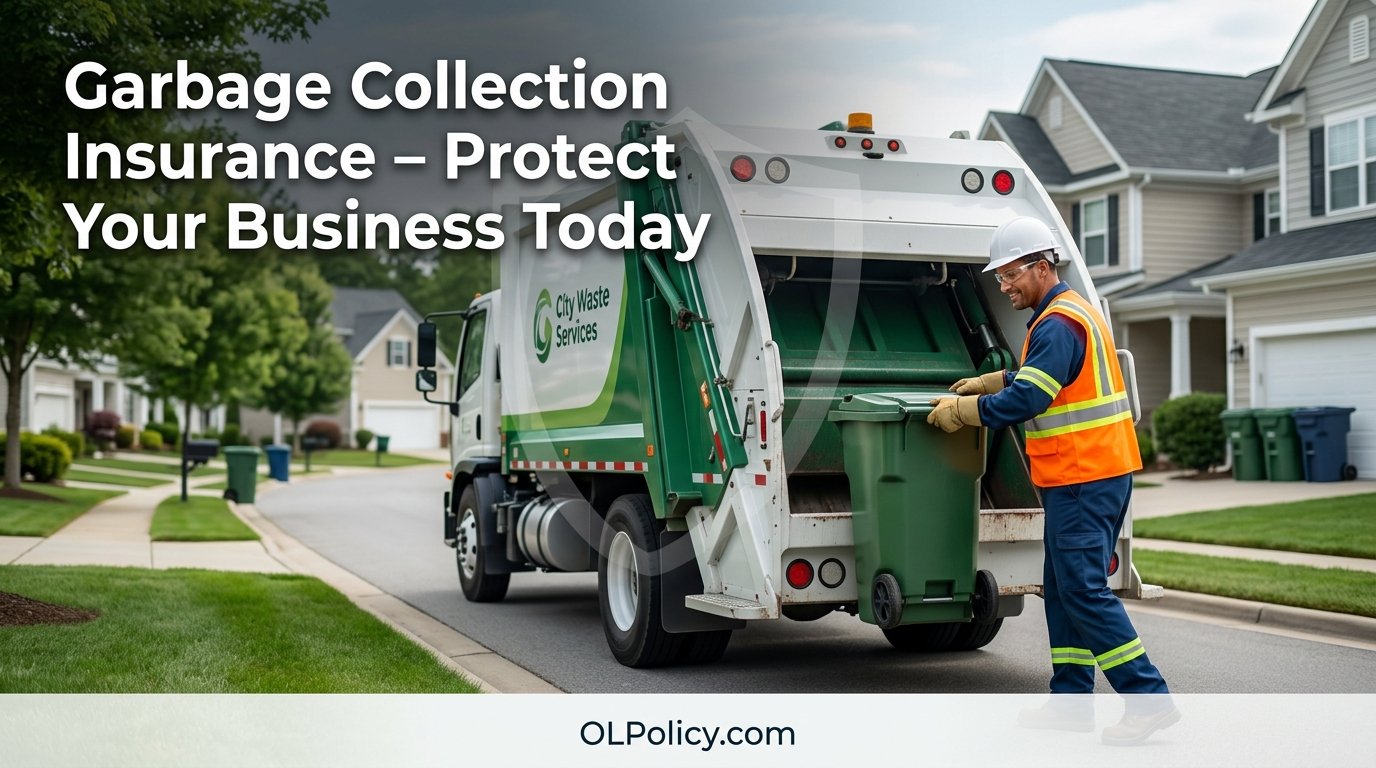
Garbage collection insurance is not just a legal formality. It is the difference between one bad route day costing you a deductible and that same day ending your business entirely.
Most garbage haulers carry some form of insurance. Far fewer carry the right combination. Three specific gaps cause the majority of denied claims in this industry and most operators never know they exist until they file.
Refuse collection is the fourth deadliest job in the United States. Your trucks operate in traffic daily, your crew handles unknown materials on every route and your vehicles carry more liability exposure per mile than almost any other commercial operation.
Two market pressures are making this worse in 2025. Nuclear verdicts — jury awards exceeding $10 million — are becoming more common against waste haulers. One Texas garbage company recently faced a wrongful death lawsuit that carried liability far beyond standard policy limits. Carrier capacity is also shrinking as insurers exit high-risk hauling lines leaving fewer options and higher premiums for operators with any claims history.
Garbage collection insurance requires purpose-built coverage from carriers who understand waste operations specifically.
This is the gap almost no competitor article mentions. The standard ISO Commercial General Liability form specifically defines waste as materials to be recycled, reconditioned or reclaimed — and excludes it. This means your standard GL policy may not respond to incidents directly involving the material you are paid to haul.
A spill during a residential pickup, contamination from an unknown chemical in a load or damage caused by collected material during transport can all fall into this exclusion. You need a GL policy written specifically for waste hauling operations not a generic small business form.
Standard GL and commercial auto policies have contained absolute pollution exclusions since the mid-1980s. For garbage haulers this exclusion is not a technicality — it directly covers the core risk of your daily operations.
If your truck overturns and spills into a roadside drainage system, if leachate seeps from a load during transport or if a customer later claims environmental contamination from materials your crew collected, your standard policies will not respond. Standalone pollution liability coverage is essential for any route-based waste collection operation.
The CDL driver shortage is forcing many operators to hire drivers they would not normally consider. Some carriers are currently making driver requirement exceptions but those exceptions come with conditions. If a claim involves a driver who does not meet your policy’s stated driver qualifications your insurer can deny the claim based on a material misrepresentation in your application.
Review your driver qualification requirements with your broker at every renewal. A driver added mid-policy who does not meet underwriting criteria creates uninsured exposure for every mile they drive.
The legal foundation for any garbage truck operation. Required in every US state for commercial vehicles and your personal auto policy provides zero coverage for business use. For heavy waste collection vehicles commercial auto must include:
Average cost runs $3,000 to $8,000 per vehicle annually for refuse trucks. Operators running tri-axle configurations should review our tri-axle dump truck insurance guide for weight-class coverage requirements. Our full commercial trucking insurance guide covers fleet structures across mixed vehicle types.
Must be written specifically for waste hauling operations not adapted from a standard GL form. Industry minimum is $1 million per occurrence and $2 million aggregate. Municipal contracts and commercial accounts regularly require $2 million per occurrence with a commercial umbrella above that.
Average cost runs $87 to $179 per month for small operators. Larger fleets with multiple routes pay significantly more.
With an industry injury rate more than double the national average workers’ comp is both legally required in almost every state and financially critical. Back injuries from heavy bin lifting, cuts from debris, crushing incidents and vehicle-related injuries are all common claims. Average cost varies by payroll and state but runs $1,500 to $5,000 annually for small operations.
Non-negotiable for any operation handling residential, commercial or municipal waste. Covers cleanup costs, regulatory fines and third-party claims arising from spills, leachate or environmental contamination during collection and transport. Without this coverage a single spill incident can generate six-figure personal liability.
Municipal garbage collection contracts are among the most demanding insurance requirements in any industry. Before awarding a contract most municipalities require:
Missing any one of these disqualifies your bid. Confirm exact requirements from the contract documents and send them directly to your broker before quoting coverage. Do not assume your existing policy qualifies.
For operators managing mixed fleets our guides on flatbed truck insurance and towing company insurance cover how multi-vehicle policies are structured. Operators with seasonal routes can explore temporary commercial vehicle insurance for part-year cost management. If you also operate junk removal services read our insurance for junk removal business guide for overlapping coverage considerations.
| Coverage | Average Annual Cost |
| Commercial Auto (per vehicle) | $3,000 to $8,000 |
| General Liability | $1,044 to $2,148 |
| Workers’ Compensation | $1,500 to $5,000 |
| Pollution Liability | $1,500 to $3,000 |
| Full Package (small fleet) | $8,000 to $20,000 |
Operators with clean driving records, documented safety programs and maintained vehicles qualify for better rates. Carriers increasingly reward telematics data and training logs as evidence of risk management during underwriting.
Operators using gooseneck trailers for equipment transport alongside garbage routes should review our gooseneck trailer insurance guide for towed unit requirements.
What is garbage collection insurance? It is a purpose-built stack of commercial coverages including GL, commercial auto, workers’ comp and pollution liability designed specifically for waste hauling operations.
Is standard general liability enough for a garbage collection business? No. Standard GL forms exclude waste by definition and contain pollution exclusions that directly eliminate coverage for the core risks of refuse collection.
Do I need pollution liability for residential garbage routes? Yes. Residential loads routinely contain chemicals, batteries and hazardous materials. A spill during transport triggers pollution liability not standard GL or auto coverage.
How much does garbage collection insurance cost per month? Small operators typically pay $650 to $1,700 per month for a complete coverage stack depending on fleet size, routes and claims history.
Can I get covered if I have prior claims? Yes. Specialty carriers focus specifically on high-risk hauling operations including operators with claims history. Standard carriers may decline you but specialist markets remain accessible.
The haulers who face financial ruin after a single incident are not uninsured. They carried standard policies that excluded the exact risks their operation creates every single day.
Get your GL written for waste operations. Add pollution liability before your next route. Confirm your driver qualifications match your policy requirements at every renewal.
Call (866) 757-5350 to speak with a licensed specialist who understands garbage collection operations. We review your existing coverage, identify every gap and build a policy stack that holds up when you need it most.