
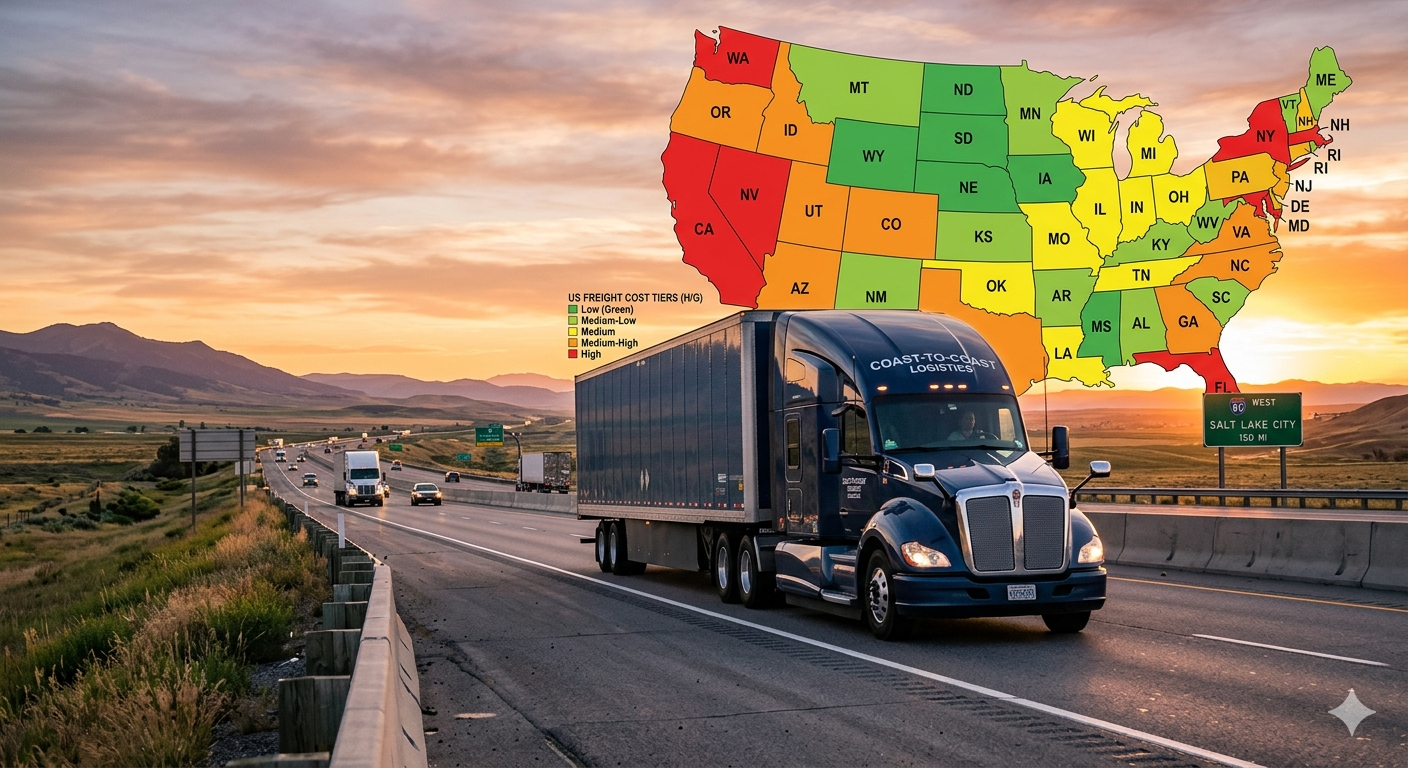
Most truckers are shocked to find that commercial truck insurance rates by state can swing by more than 240%. A driver in Maine might pay around $275 per month for $1 million in liability coverage while someone running the same truck in New York pays close to $666 per month for identical limits.
That is not a typo. That is the real gap and it is the reason your ZIP code matters almost as much as your driving record.
This guide breaks down trucking insurance costs nationwide, explains what drives the price difference between states and gives you practical steps to stop overpaying on your next renewal.
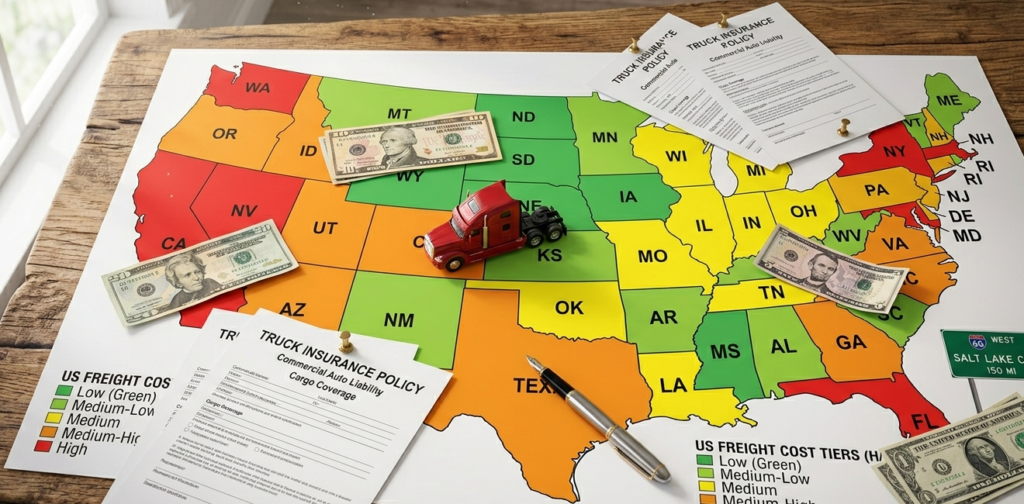
Here is a realistic monthly and annual range for a single-truck owner-operator carrying general freight with $1 million in liability coverage:
| State Tier | Example States | Monthly Range | Annual Range |
| Low Cost | Maine, Vermont, Montana, Iowa, North Dakota | $275 – $450 | $3,300 – $5,400 |
| Mid Cost | Tennessee, Georgia, Ohio, Texas | $500 – $800 | $6,000 – $9,600 |
| High Cost | California, Florida, Illinois, New Jersey | $850 – $1,200 | $10,200 – $14,400 |
| Very High Cost | New York, New Jersey metro, South Florida | $1,200 – $1,800+ | $14,400 – $21,600+ |
These figures cover liability only. Adding cargo coverage, physical damage and non-trucking liability will push your full policy toward the $13,000 to $22,000 annual range in most states.
For a month-by-month breakdown, see our guide on semi truck insurance cost per month.
The single biggest driver of high truck insurance premiums by state is litigation. States like Florida, California and New Jersey sit in what insurers call “high-verdict” territory where juries regularly award settlements above $10 million against trucking companies. Insurers price that courtroom risk into every policy they write in those states.
Low-verdict states like Montana and the Dakotas see far fewer large awards so carriers can afford to charge less.
Running unlimited mileage across all 48 states costs significantly more than operating a 500-mile regional radius even if you are based in a cheaper state. Many owner-operators default to unlimited coverage when they only need regional, which raises their rate unnecessarily.
Urban routes within any state also add 15 to 25 percent to premiums compared to rural miles in the same region. Where your truck sleeps and where it drives are two different pricing factors.

The FMCSA sets federal minimums for all interstate carriers. General freight requires at least $750,000 in liability. Hazmat carriers need between $1 million and $5 million depending on what they haul.
States can add requirements on top of those federal floors. California requires a separate Motor Carrier Permit with state-specific filings. Some states require higher intrastate minimums than the federal baseline.
Always carry the higher of the two limits. Running short on either standard triggers federal violations and gaps that no insurer will cover after an accident.
For full coverage structure guidance visit our commercial trucking insurance resource page.
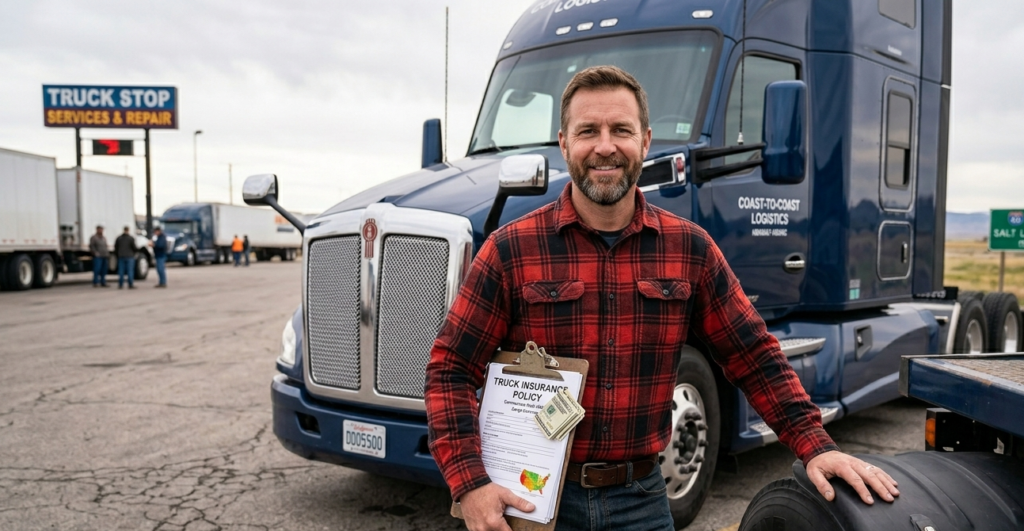
If you just got your own USDOT authority, expect a premium penalty in your first two years no matter what state you operate from. Carriers treat new authority as an unknown risk and price it accordingly.
New owner-operators typically pay $1,200 to $1,850 per month for a full policy. Experienced operators with three or more clean years pay $650 to $1,100 per month in mid-tier states.
That gap is the “new authority tax.” The fastest way out of it is a spotless safety record and consistent on-time cargo delivery history. Specialty vehicle operators those running flatbed trucks, tri-axle dump trucks or gooseneck trailers face additional underwriting scrutiny that raises starting premiums even further.
These five moves consistently reduce freight truck insurance pricing regardless of which state you operate from:
If you operate other commercial vehicles, these principles apply across the board. See our specific guides on cargo van insurance, towing company insurance and food truck business insurance for vehicle-specific cost breakdowns.
Need coverage between loads or during a gap? Our temporary commercial vehicle insurance guide covers short-term options that keep you compliant without overpaying.
Which state has the cheapest commercial truck insurance? Maine, Vermont and North Dakota consistently rank lowest. Rates in these states can fall below $300 per month for $1 million in liability.
What is the average monthly semi truck insurance cost? Most owner-operators pay $650 to $1,800 per month depending on state coverage level and cargo type.
Do FMCSA insurance requirements change by state? FMCSA sets federal minimums but states can require higher limits for intrastate operations. You always carry the higher of the two.
Why do new trucking authorities pay more? Carriers treat new authority as unproven risk. Most new operators pay a premium penalty for the first one to two years until they build a clean loss history.
Does my garage state affect my rate if I haul nationwide? Yes. Your garaging state sets your base rate even if you run all 48 states. It is one of the first things underwriters check.
Commercial truck insurance rates by state are never one-size-fits-all. Your premium reflects your state’s litigation climate your operating radius your cargo type and your safety record. The good news is that with the right broker and accurate information you can almost always beat your last quote.
Call our team today at (866) 757-5350 for a fast no-pressure quote built around your specific operation and state. We work with owner-operators and fleets of all sizes to find the most competitive trucking insurance quotes by state available.
Additional resources: