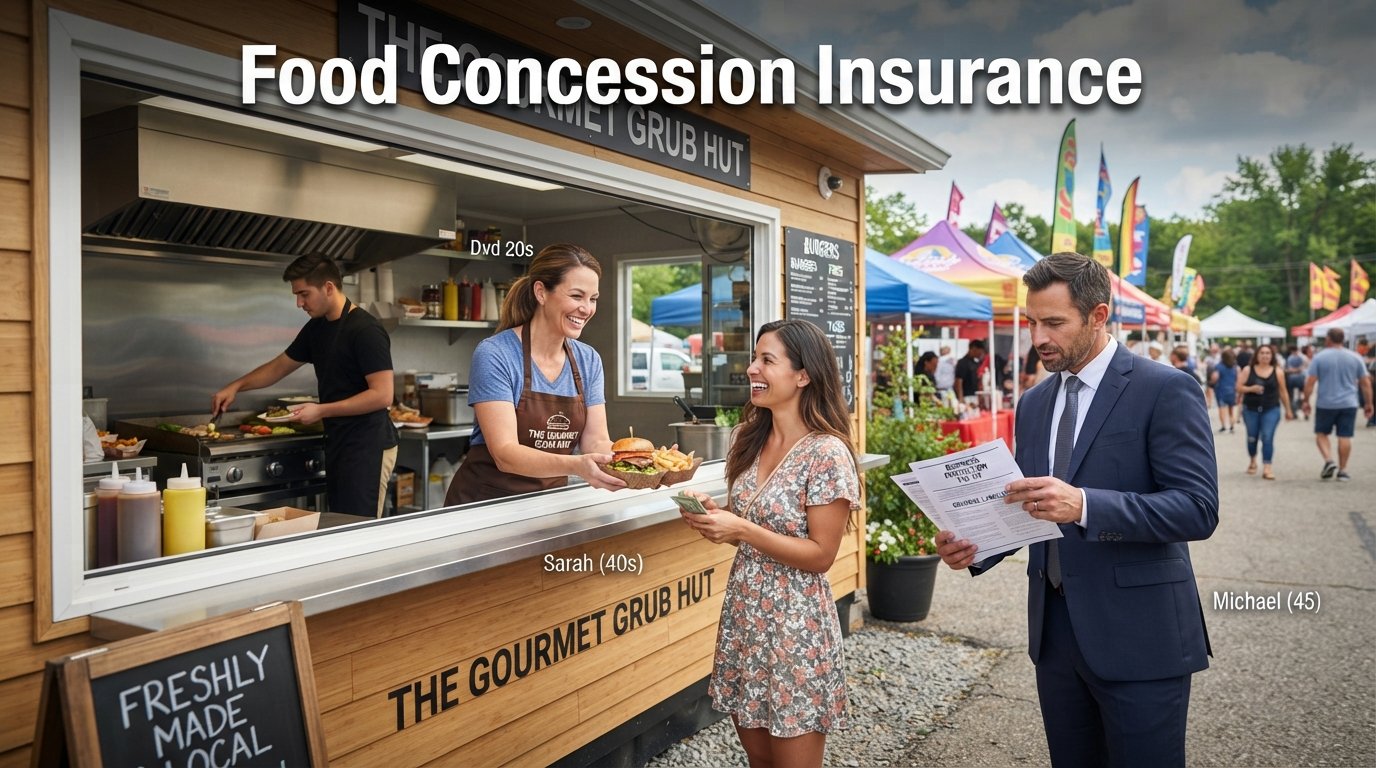
One bad food poisoning claim can shut down your concession stand for good. Food concession insurance protects vendors from lawsuits, fires and equipment loss. Customers struggle with knowing what coverage they actually need.
This problem happens because food concessions face risks regular businesses don’t. You serve food in tents, trailers and outdoor lots. Hot grease, propane tanks and crowded fairgrounds raise your risk daily. The right coverage closes those gaps before they cost you everything.
In this guide, you’ll learn what food concession insurance covers, how much it costs in 2026 and which policy fits your business. We’ll break down annual versus per-event plans, state requirements and real risks. By the end, you’ll know exactly what to buy.
Food concession insurance protects vendors who sell food at fairs, festivals and events. It covers lawsuits, property damage and food-related illness claims. This coverage fills gaps that home or general business policies leave open.
Customers struggle with mixing this up with regular restaurant insurance. A food truck or stand moves locations constantly. That changes the risk completely. Venues often require proof of coverage before you can even set up your tent.
This insurance bundles several protections into one package. Most policies include liability, property and equipment coverage together. Vendors who skip it often pay out of pocket after a single accident.
Food vendors face fire, illness claims, theft and injury risks every event. These risks hit harder outdoors. There’s no sprinkler system in a parking lot.
This problem happens when food sits at the wrong temperature too long. A customer gets sick and files a claim against you. Liability coverage pays legal fees and settlements tied to these claims. One outbreak at a festival can affect dozens of customers at once.
Fryers and grills cause more fires than people expect. Propane tanks near a fryer turn small flare-ups into disasters. Property coverage replaces damaged equipment and tents fast.
Someone trips on your generator cord. They spill hot coffee and blame your setup. General liability covers medical bills and legal costs from these incidents.
Fairgrounds sit unattended overnight sometimes. Generators get stolen. Refrigeration units fail and spoil thousands in inventory.
You can solve most coverage gaps by combining these six policies into one package.
| Coverage Type | What It Protects |
| General Liability | Injuries, food illness claims, property damage |
| Property & Equipment | Fryers, fridges, generators, tents |
| Business Interruption | Lost income after a covered event shuts you down |
| Liquor Liability | Claims tied to alcohol sales at events |
| Commercial Auto | Mobile units, trailers and food trucks |
| Workers’ Comp | Employee injuries on the job |
This coverage handles the most common concession claims. It pays for customer injuries, food poisoning lawsuits and property damage you cause. Most venues won’t let you operate without it.
Your fryers, grills and refrigerators cost thousands to replace. This protects equipment from fire, theft and storm damage. Mobile units need this even more than fixed stands.
This applies only if you serve beer or wine at your stand. Liquor liability covers claims from intoxicated customers. Many fairs require this as a separate add-on.
Your choice depends on how often you work events. Annual policies suit vendors who attend ten or more events yearly. Per-event policies fit vendors doing one or two fairs a season.
A per-event policy covers a single weekend only. It costs less upfront but adds up fast across bookings. Annual coverage saves money once you pass six to eight events per year.
Per-event policies run $150 to $800 depending on event size and food type. Annual policies cost $1,200 to $5,000 per year. Frying foods or serving allergens raises your premium.
Several factors push costs up or down. Crowd size, alcohol sales and propane use all matter to underwriters. Vendors with clean claim histories pay less over time.
Most venues require proof of liability insurance before you can vend. They typically ask for $1 million in coverage minimum. Some fairgrounds also require the venue listed as “additional insured” on your policy.
Health permits run separately from insurance but often get checked together. You can solve delays by gathering both documents weeks before the event. Last-minute paperwork is the top reason vendors get turned away at gate check-in.
You can lower your rate by tightening food safety habits.
These habits build a paper trail that helps you fight claims and lower renewal rates.
What does food concession insurance cover? It covers liability, equipment damage, food illness claims and sometimes liquor sales.
Do I need insurance for a one-day festival? Yes. Most venues require proof of coverage even for single-day events.
Can I get covered the same week as my event? Many per-event policies issue proof of insurance within 24 to 48 hours.
Does my homeowner’s policy cover my food stand? No. Personal policies exclude commercial food sales completely.
Food concession insurance isn’t optional once you sell food in public. One claim, one fire, or one sick customer can wipe out a season’s profit. The right policy protects your equipment, your income and your reputation at every event you book.
Insurance Services has spent 20+ years helping vendors find coverage that actually fits their business. We know which policies satisfy venue requirements and which leave gaps. Our team reviews your event calendar and builds a plan around it, not a generic template.
Don’t wait until after an accident to get covered. We’re ready to help you find the right food concession insurance today. Call us at +1 (866) 757-5350 and let our experienced agents protect what you’ve built. .OLPolicy is the best insurance provider for vendors who need coverage they can trust.