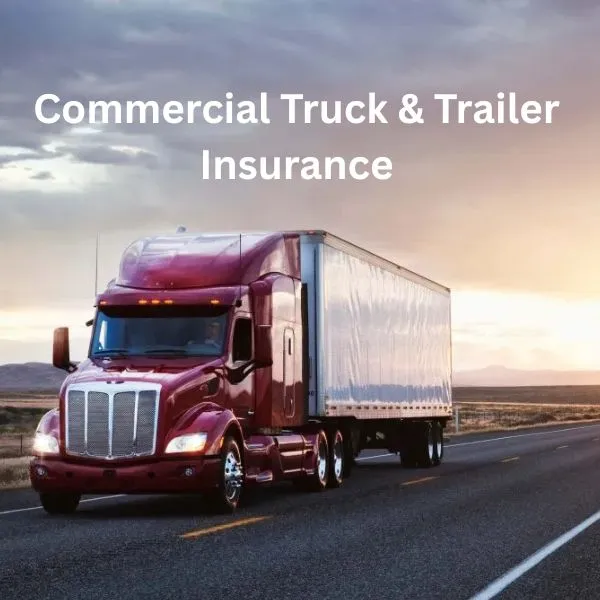
Are you financially prepared if your truck or trailer is involved in an accident, stolen, or damaged while transporting goods? For businesses that rely on transportation, one unexpected incident can lead to massive losses, legal complications AND operational downtime. Commercial truck and trailer insurance is designed to protect trucking companies, owner-operators AND logistics businesses from these risks while ensuring compliance with federal and state regulations.
This specialized coverage goes beyond personal auto insurance by addressing the unique exposures faced in the transportation industry. From liability protection to cargo coverage, the right policy safeguards your vehicles, freight AND reputation. Understanding how this insurance works helps business owners make informed decisions, reduce financial vulnerability AND maintain smooth operations even during challenging situations.
Commercial truck and trailer insurance is a policy that provides financial protection for trucks, trailers AND related business operations used in transporting goods. It helps cover damages, injuries, legal expenses AND cargo losses that may occur during transit.
Unlike personal vehicle insurance, this coverage is tailored specifically for heavy-duty vehicles operating in higher-risk environments such as highways, construction zones AND long-haul routes. Policies can be customized depending on the type of freight transported, driving radius AND vehicle weight.
Businesses often bundle multiple protections into one comprehensive plan to avoid coverage gaps and improve risk management.
Operating without adequate insurance can expose trucking companies to severe financial setbacks. Accidents involving commercial trucks often result in higher repair costs and liability claims compared to standard vehicles.
Insurance is not only a safety net but also a regulatory requirement in many regions. Motor carriers must meet minimum liability limits before operating legally.
Additionally, clients and brokers prefer working with insured carriers because it builds trust and demonstrates professionalism. Having proper coverage can therefore enhance your company’s credibility while protecting long-term profitability.
Understanding available coverage options allows business owners to build a policy that aligns with their operational risks.
Primary Liability Insurance: Covers bodily injury and property damage caused to others in an accident where the truck driver is at fault.
Physical Damage Coverage: Pays for repairs or replacement if the truck or trailer is damaged due to collisions, vandalism, fire, or natural disasters.
Cargo Insurance: Protects the freight being transported against theft, damage, or loss.
Non-Trucking Liability: Offers protection when the truck is used for non-business purposes.
Bobtail Insurance: Covers drivers operating without a trailer attached.
Selecting the right combination ensures broader protection against both predictable and unexpected incidents.
This insurance is crucial for multiple professionals within the transportation ecosystem.
Owner-operators benefit from customized policies that match their driving patterns and cargo types. Fleet owners require scalable coverage to protect multiple vehicles under a unified plan. Freight companies, logistics providers AND contractors transporting specialized equipment also depend on this insurance to mitigate operational risks.
Even leased operators may need additional coverage beyond what a motor carrier provides, making it essential to review contractual obligations carefully.
Commercial truck insurance functions as a contractual agreement between the insurer and the policyholder, offering financial compensation for covered events in exchange for premium payments.
When a claim is filed, the insurer evaluates the incident, verifies coverage details AND determines the payout based on policy limits and deductibles. Higher deductibles generally reduce premium costs but increase out-of-pocket expenses during claims.
Insurers assess risk using factors such as driving history, vehicle type, cargo classification AND travel distance. Maintaining safety standards and regulatory compliance often results in more favorable policy terms.
Premium rates vary widely depending on operational and risk-related variables.
Driving records play a significant role; clean histories typically qualify for lower rates. Vehicle specifications, including weight and condition, also impact pricing. Businesses transporting hazardous materials usually face higher premiums due to increased liability exposure.
Location matters as well areas with dense traffic or higher accident rates often lead to elevated costs. Additionally, coverage limits and deductible selections directly affect the final premium.
Implementing safety programs and regular vehicle maintenance can help control long-term insurance expenses.
Investing in comprehensive truck and trailer insurance provides more than regulatory compliance.
Financial protection is the most obvious advantage, shielding businesses from catastrophic losses. It also ensures operational continuity by minimizing disruptions after accidents.
Another important benefit is legal support. Liability claims can be complex and costly, but insurance helps cover attorney fees and settlements.
Most importantly, the right policy offers peace of mind, allowing business owners to focus on growth instead of potential risks.
While commercial truck insurance is extensive, it does not cover every scenario.
Intentional damage, driver misconduct AND certain contractual liabilities are typically excluded. Mechanical breakdown due to poor maintenance may also fall outside policy protection.
Overloading trailers beyond legal limits can void coverage, emphasizing the importance of following safety regulations.
Carefully reviewing policy exclusions helps prevent surprises during claim situations and ensures realistic expectations of protection.
Selecting the right policy requires strategic evaluation rather than simply choosing the lowest premium.
Start by assessing your business risks, including cargo value and driving radius. Compare multiple insurers to understand coverage flexibility and claims responsiveness.
Look for providers with strong industry experience and positive customer feedback. Customizable policies are especially valuable because trucking operations often evolve.
Finally, review policy details annually to ensure coverage keeps pace with business growth.
Reducing insurance costs is possible with proactive risk management. Consider these practical strategies:
These steps not only cut expenses but also strengthen overall operational safety.
Commercial truck and trailer insurance is a critical investment for any business involved in freight transportation. Beyond meeting legal requirements, it acts as a protective shield against financial loss, liability claims AND operational disruptions.
By understanding coverage options, evaluating risk factors AND selecting a policy tailored to your needs, you position your business for long-term stability. In an industry where uncertainty is part of daily operations, the right insurance ensures that unexpected events do not derail your progress.
Prioritizing comprehensive protection today helps secure a safer and more resilient future for your trucking business.
Secure your business with dependable commercial truck and trailer insurance tailored to your needs. Call (866) 757-5350 now to speak with an expert and get your customized quote today.